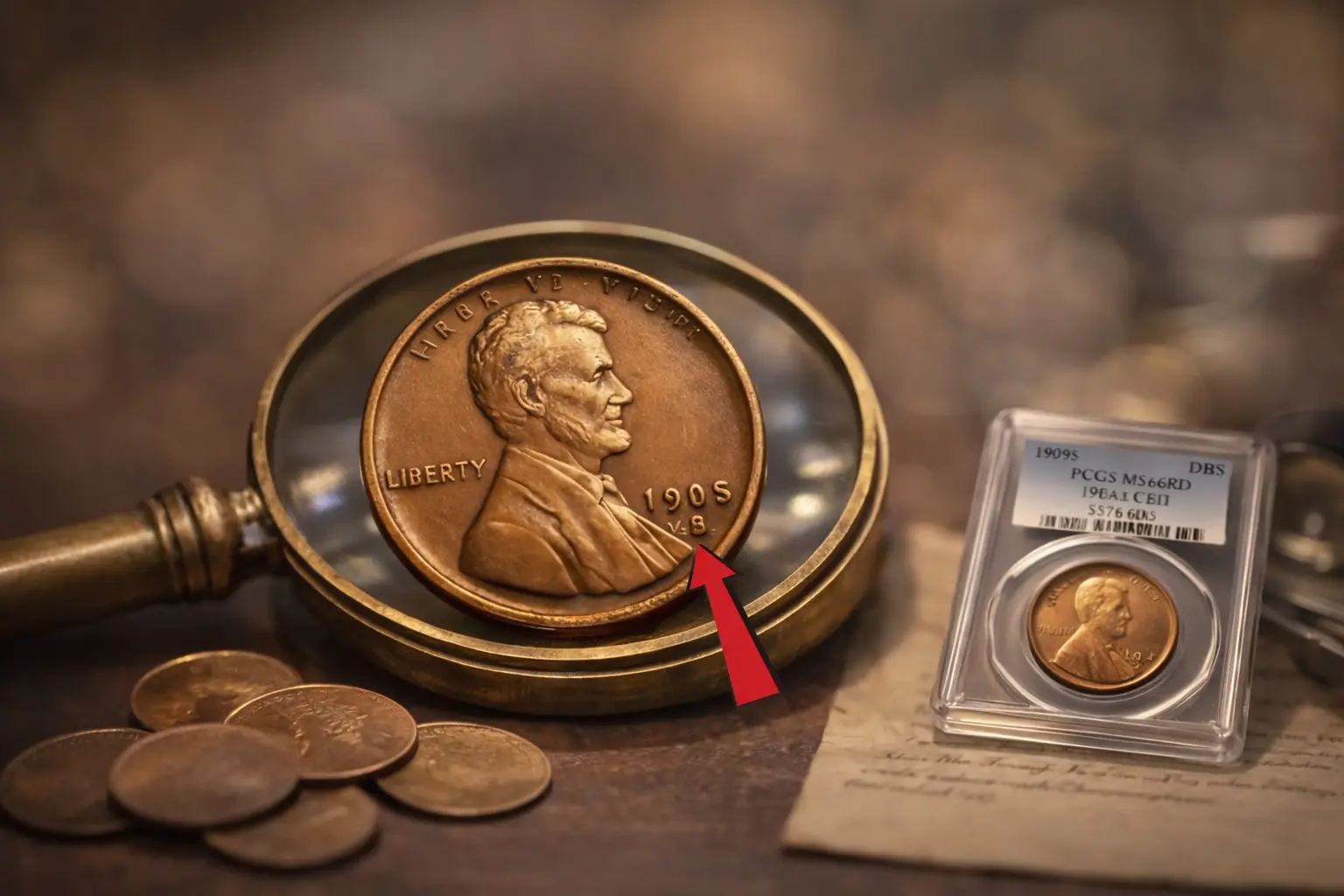
Few U.S. coins capture collectors’ imagination like the Lincoln Wheat penny. First issued in 1909 to commemorate the 100th birthday of Abraham Lincoln, the cent introduced a bold new look for American coinage. Sculpted by Victor David Brenner, the design paired Lincoln’s portrait on the front with two wheat ears on the reverse—an emblem of growth and prosperity.
Most Wheat pennies trade for pocket change today, but a small group of scarce dates and errors has achieved legendary status. One example—a 1943 copper cent—has reached an eye-popping $576,000 at auction.
How the Wheat penny began
The Lincoln Wheat cent replaced the Indian Head penny in 1909, becoming the first U.S. coin to depict a real person rather than a symbolic figure. Early issues were struck in bronze (about 95% copper with tin and zinc). The wheat reverse remained in use until 1958, when it gave way to the Lincoln Memorial design.
What drives value in Wheat pennies?
While millions were minted, a handful stand out due to:
- Scarcity from low mintages
- Minting mistakes (double dies, off-center strikes, wrong planchets)
- Historic circumstances that created unusual varieties
- Condition, with mint-state coins commanding strong premiums
- Sustained collector demand for iconic dates
The famous $576,000 cent: 1943 copper
During World War II, copper was diverted for military needs, so 1943 cents were struck on zinc-coated steel. A tiny number of copper planchets left over from 1942 slipped into production, creating one of the most celebrated errors in U.S. numismatics.
Only a few authentic 1943 copper Wheat pennies are known. Their combination of extreme rarity and wartime history has pushed prices into six figures—culminating in a top sale around $576,000 for a pristine specimen.
How to spot a genuine 1943 copper penny
If you suspect you’ve found one, check the basics:
- Magnet test: steel sticks; copper doesn’t
- Color: copper shows a reddish-brown tone, not steel gray
- Professional authentication: submit to Professional Coin Grading Service (PCGS) or Numismatic Guaranty Company (NGC)
Other Wheat pennies collectors chase
Beyond the 1943 copper error, these dates and varieties are perennial favorites:
- 1909-S VDB – first year with the designer’s initials
- 1914-D – low mintage from Denver
- 1922 “No D” – a Denver issue missing its mint mark
- 1955 Double Die Obverse – dramatic doubling in lettering
- High-grade common dates – ordinary years become valuable in mint state
Error coins: small mistakes, big money
Mint errors add intrigue—and value. Sought-after Wheat penny errors include:
- Double dies (front or back)
- Off-center strikes
- Wrong planchet strikes
- Missing mint marks in specific varieties
Depending on rarity and condition, these can elevate a penny from a few dollars to thousands.
2026 value snapshot (general guide)
| Year / Variety | Circulated (Avg.) | Mint State | Why It Matters |
|---|---|---|---|
| 1909-S VDB | $500–$1,000 | $5,000+ | Debut issue |
| 1914-D | $200–$500 | $3,000+ | Low mintage |
| 1922 No D | $500–$1,000 | $10,000+ | Missing mint mark |
| 1943 Copper | $100,000+ | $576,000+ | Wartime error |
| 1955 DDO | $1,000–$2,500 | $25,000+ | Bold doubling |
| Common dates | Face value | $1–$20 | Value in high grade |
Prices vary with market demand and condition.
Collector trends to watch in 2026
- Strong interest in iconic errors and headline rarities
- Premiums for professionally graded coins
- Growing enthusiasm for error varieties
- Competitive online auctions drawing global bidders
- Set builders seeking complete date-and-mint runs
Grading basics: why condition matters
Wheat pennies are graded from Poor (P-1) to Mint State (MS-70). Value hinges on:
- Strike sharpness
- Original luster
- Surface preservation
- Overall eye appeal
Third-party grading helps confirm authenticity and market value.
Practical tips for collectors
- Examine coins under bright light with magnification
- Store pieces in protective holders
- Consider grading for scarce dates or errors
- Track auction results to gauge trends
- Check inherited jars and albums—treasures do turn up
Why Wheat pennies endure
Beyond price tags, Lincoln Wheat cents resonate for their artistry and history. They bridge everyday circulation and national memory, rewarding patience and curiosity. The tale of the $576,000 1943 copper cent proves that remarkable finds can still emerge from ordinary places.
Bottom line: most Wheat pennies are common, but the right date, error, and condition can transform a simple cent into a museum-worthy prize—and a thrilling discovery for collectors.