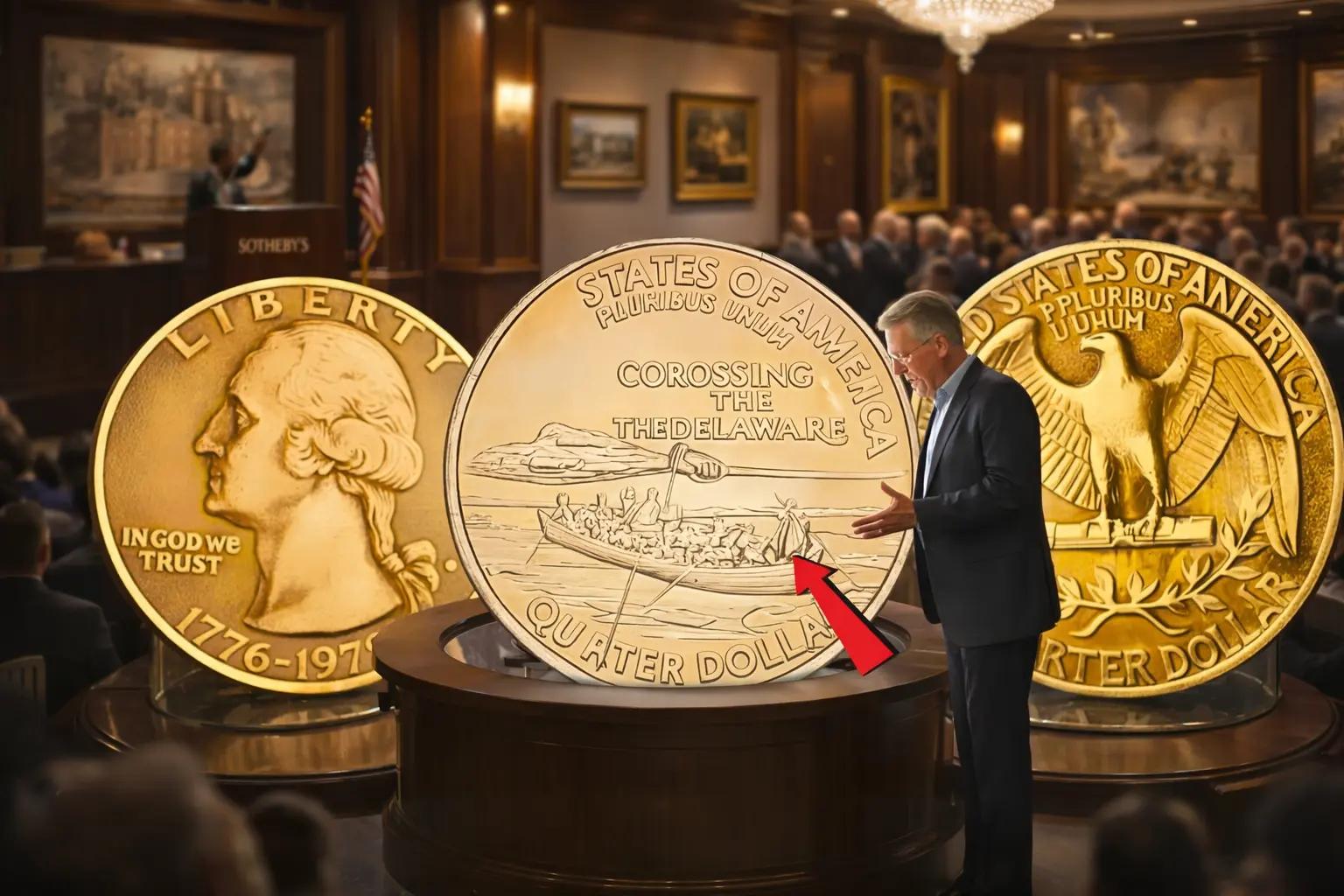
The 1976 Bicentennial quarter stands out as one of the most recognizable U.S. coins ever produced. Created to mark 200 years since the signing of the Declaration of Independence, this quarter broke from tradition with a special reverse design that immediately set it apart from standard issues. While most examples still trade for just 25 cents, a small number of silver versions, rare varieties, and mint errors have become highly desirable among collectors.
Decades later, these quarters remain a favorite hunt for both seasoned numismatists and casual coin searchers.
How the Bicentennial quarter came to life
To celebrate America’s bicentennial, the United States Mint released commemorative designs for the quarter, half dollar, and dollar. The quarter retained the familiar portrait of George Washington on the obverse, while the reverse—designed by Jack L. Ahr—featured a colonial drummer with a torch and thirteen stars.
These quarters were struck in:
- Copper-nickel clad for general circulation
- 40% silver for collector editions
Production took place at the Philadelphia, Denver, and San Francisco mints, resulting in billions of coins overall—yet only a fraction are truly valuable today.
What makes some Bicentennial quarters valuable?
Although most are common, certain characteristics dramatically increase a coin’s worth:
- Silver composition, especially 40% silver issues
- Minting errors such as doubled dies or off-center strikes
- Proof and special collector strikes
- High-grade condition, particularly uncirculated or proof states
- Strong collector demand tied to the bicentennial theme
Four Bicentennial quarters collectors actively seek
1. 1976-S Silver Proof Quarter
Struck in San Francisco as part of special proof sets, these coins contain 40% silver and exhibit deep mirror-like surfaces. Typical values range from $10 to $50, with top-quality examples selling for more.
2. 1976-D Double Die Obverse
This well-known error shows visible doubling in lettering and design details. Authentic examples are scarce and can sell from $500 into the thousands, depending on grade.
3. 1976-S Silver Uncirculated Quarter
Also struck in 40% silver, these were issued in collector sets rather than proof form. They are scarcer than clad issues and often sell for $20 to $100+ in higher grades.
4. Bicentennial Quarter Mule Error
The ultimate rarity. Mule errors occur when mismatched dies are paired incorrectly. These Bicentennial quarter mules are exceptionally rare and have achieved five-figure auction results, sometimes exceeding $50,000.
How values have evolved in recent years
Over the last decade, the market for Bicentennial quarters has shown steady growth in select areas:
- Increased demand for silver issues as bullion prices fluctuate
- Strong premiums for certified high-grade coins
- Growing interest in major error coins
- Online auctions creating competitive global bidding
- Rising popularity of full Bicentennial coin sets
General price guide
| Variety | Circulated Value | Mint State / Proof | Notes |
|---|---|---|---|
| 1976-S Silver Proof | $10–$20 | $50–$200 | Collector strike |
| 1976-D Double Die | $500+ | $2,000–$5,000+ | Rare error |
| 1976-S Silver Uncirculated | $20–$50 | $100+ | Scarcer silver issue |
| Mule Error | $10,000+ | $50,000+ | Extremely rare |
| Common Clad Issues | Face value | $1–$5 | Value rises in high grade |
Prices vary with condition and market demand.
Why grading matters
Bicentennial quarters are graded on a scale from Poor (P-1) to Mint State (MS-70). Key factors that influence value include:
- Strike sharpness
- Original luster
- Surface condition
- Overall eye appeal
Coins authenticated and graded by professional services often command significantly higher prices.
Tips for collectors and change hunters
- Examine coins under bright light and magnification
- Look for an “S” mint mark indicating potential silver issues
- Weigh suspicious coins to confirm silver content
- Store valuable finds in protective holders
- Consider professional grading for rare varieties or errors
Old collections and inherited coin jars are especially worth checking—valuable Bicentennial quarters are still being discovered.
Why Bicentennial quarters remain popular
Beyond their monetary potential, Bicentennial quarters symbolize a historic national celebration and a rare moment when U.S. circulating coinage embraced commemorative design. That blend of history, artistry, and the possibility of hidden value keeps collectors searching decades later.
Bottom line
Most 1976 Bicentennial quarters are common, but silver issues and genuine mint errors can be worth hundreds—or even tens of thousands—of dollars. For collectors, the excitement lies in knowing that an ordinary-looking quarter could turn out to be an extraordinary piece of American history.