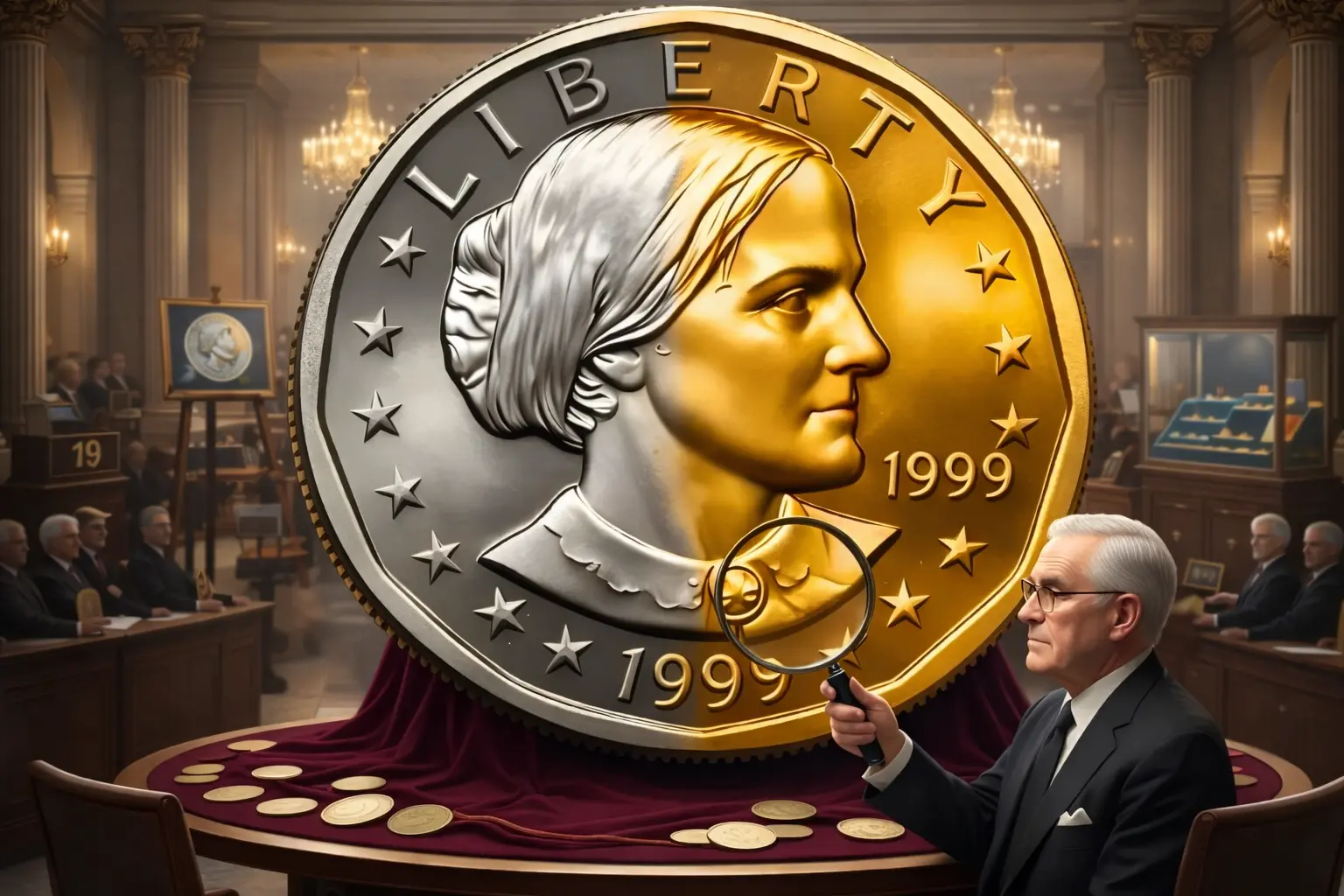
The Susan B. Anthony dollar occupies a distinctive chapter in U.S. coinage. Launched in 1979, it became the first American coin to portray a real woman, honoring Susan B. Anthony for her lifelong advocacy of women’s rights. While the coin struggled in circulation—largely because its size and color were easily confused with the quarter—it has grown into a compelling collectible.
Among all dates, the 1999-P stands out. It represents the final year of issue before the transition to the Sacagawea dollar, and in 2026 collectors continue to prize high-grade examples and legitimate mint errors.
How the Susan B. Anthony dollar came to be
The coin was introduced as a practical alternative to the bulky Eisenhower dollar. Smaller and lighter, it featured Anthony’s portrait on the obverse and an eagle landing on the Moon on the reverse—a nod to the Apollo 11 insignia. Despite its symbolism, public adoption lagged, vending machines aside, and regular production ended after the early 1980s.
Why 1999-P is a key date
After years out of production, the Susan B. Anthony dollar was briefly revived in 1999 to satisfy demand for dollar coins in transit systems and vending machines. Millions were struck at the Philadelphia Mint, but quality varies widely. As a result, well-preserved coins and authentic error varieties are the pieces that attract strong premiums today.
Noteworthy errors found on 1999-P coins
Mint mistakes turn ordinary dollars into sought-after collectibles. For the 1999-P issue, collectors watch for:
- Double-die obverse – visible doubling on lettering or the portrait
- Off-center strikes – designs noticeably shifted from center
- Wrong planchet strikes – the dollar design impressed on another denomination’s blank
- Clipped planchets – missing metal from a misfed blank
Depending on severity and condition, these errors can boost values from a few dollars to four figures.
2026 value overview (general ranges)
| Coin / Variety | Circulated | Mint State | Why Collectors Care |
|---|---|---|---|
| 1999-P Regular | $1–$3 | $10–$25 | Final-year issue |
| 1999-P Proof | $10–$20 | $50–$100 | Scarcer in top grades |
| 1999-P Double Die | $50–$100 | $500+ | Popular error |
| 1999-P Off-Center | $25–$75 | $200+ | Visual appeal |
| 1999-P Wrong Planchet | $100–$300 | $1,000+ | Major mint error |
| 1999-P Clipped | $50–$150 | $400+ | Collectible mistake |
Actual prices vary by condition and demand.
What collectors are chasing in 2026
- Certified errors with clear diagnostics
- High-grade proofs authenticated by Professional Coin Grading Service (PCGS) or Numismatic Guaranty Company (NGC)
- Complete date-and-mint sets
- Competitive bidding through online auctions and major shows
- New hobbyists drawn to the coin’s accessibility and historical meaning
Grading basics: what affects value most
Susan B. Anthony dollars are graded from Poor (P-1) to Mint State (MS-70). Key factors include:
- Strike quality and sharpness of details
- Luster, especially original mint sheen
- Surface condition, with minimal marks or wear
- Eye appeal, which can separate average coins from standout pieces
Third-party grading not only verifies authenticity but also strengthens resale confidence.
Practical tips for collectors
- Examine coins under strong light with magnification
- Store pieces in inert holders to prevent damage
- Submit suspected errors or top-grade coins for certification
- Track auction results to understand market movement
- Check inherited rolls and jars—1999-P surprises still surface
Why these dollars remain appealing
Beyond price, Susan B. Anthony dollars resonate for what they represent: a milestone in recognizing women on U.S. currency and a transitional moment in modern coin design. The 1999-P issue, in particular, bridges eras—closing one chapter just as another began.
In short: most examples are modestly priced, but the right condition or error can turn an overlooked dollar into a standout collectible. For many hobbyists, that mix of history, affordability, and discovery is exactly what keeps the Susan B. Anthony dollar relevant in 2026.